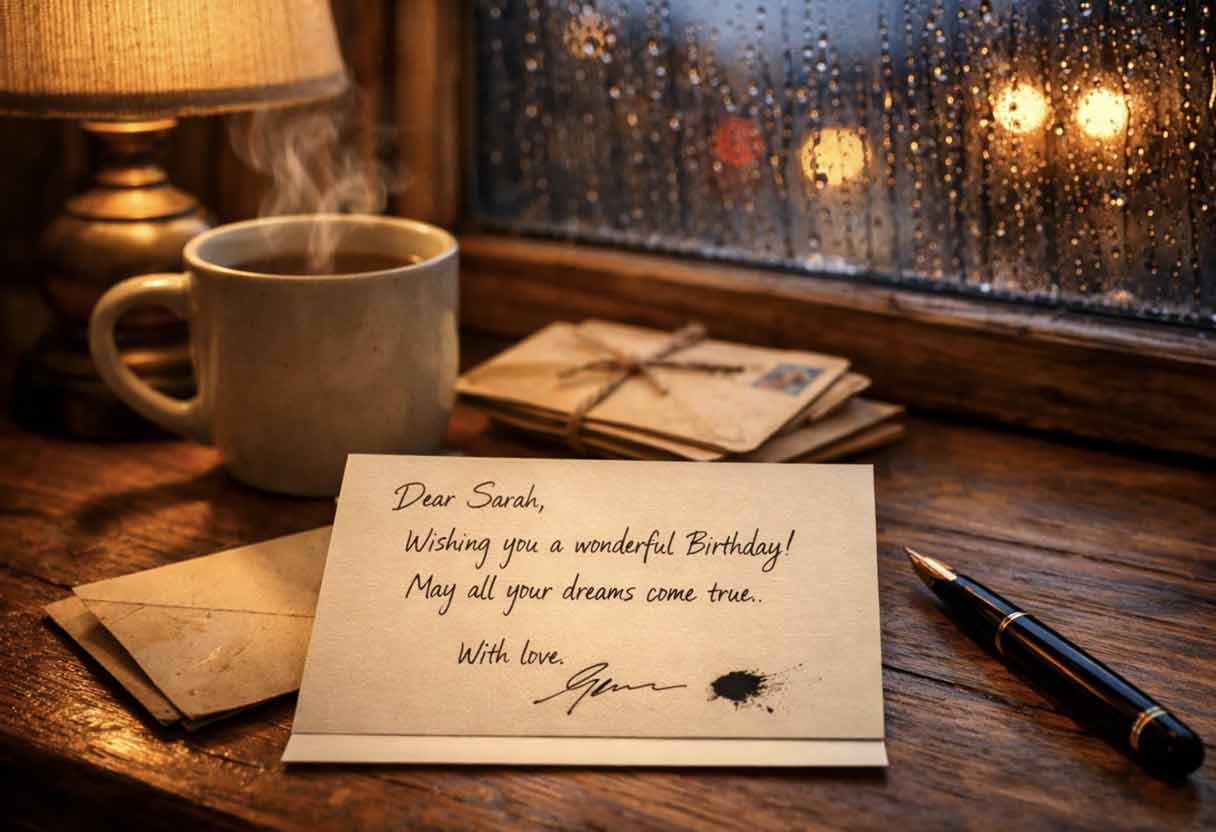
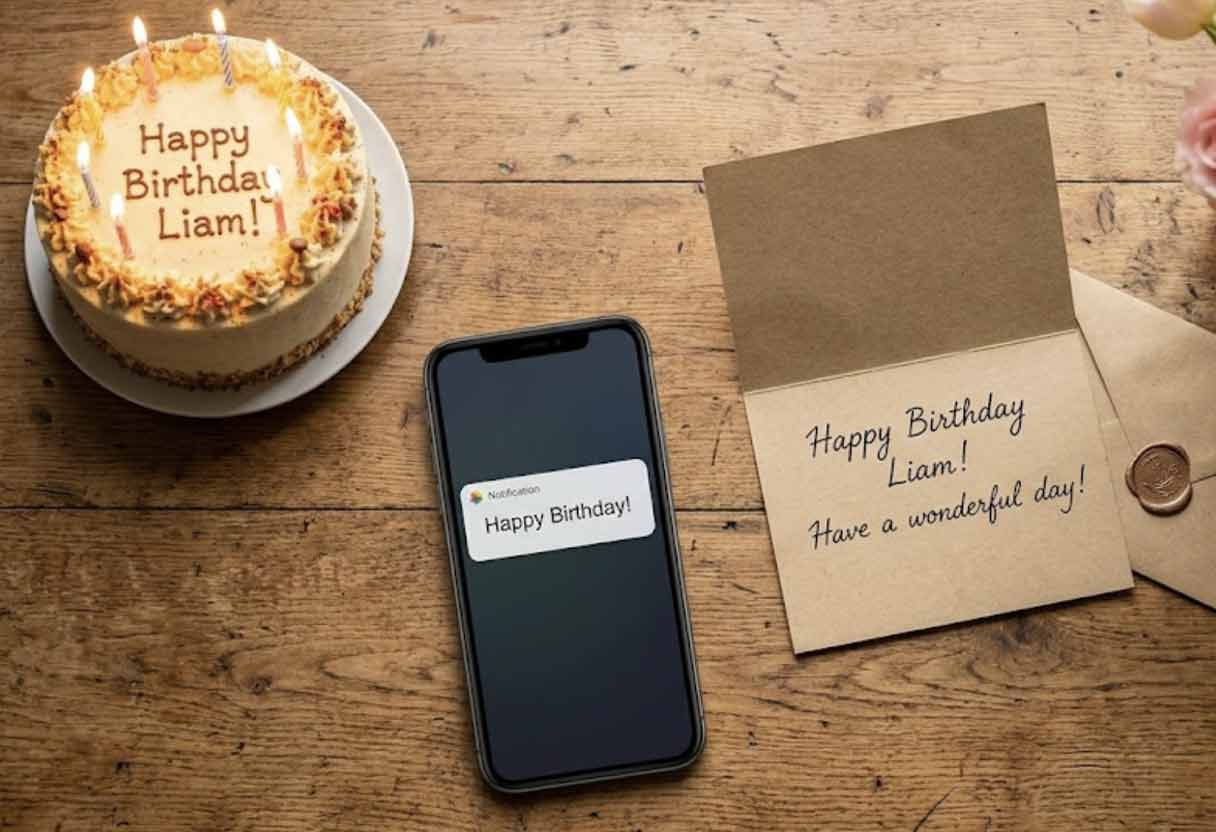
A birthday greeting may take only a few moments to send, but the way you deliver it significantly shapes how meaningful it feels. A quick text offers unmatched convenience, while a handwritten card reflects time, effort, and planning. Still, a genuine personal connection does not depend on paper alone. A thoughtful WhatsApp message, email, e-card, or social media post can also make someone feel deeply valued.
In the debate over digital vs. handwritten birthday cards, the most personal choice ultimately depends on the relationship, the occasion, and the recipient’s unique preferences. The best format is simply the one that resonates with the recipient’s personality and communication style. This guide compares each birthday greeting format to help you choose the one that feels sincere, warm, and perfectly suited for the person celebrating.
What Makes a Birthday Greeting Feel Personal?
A personal birthday greeting feels thoughtful, specific, and tailored to the dynamic of your relationship. While the format matters, the substance of the message itself usually carries the heaviest emotional weight.
Several key factors shape how meaningful a greeting feels:
- The effort involved: A greeting feels inherently more personal when it demonstrates time, planning, or deliberate care.
- Customized wording: Incorporating the recipient’s name, personality, or specific interests makes the message feel genuinely authentic.
- Shared memories: Referencing a special moment, an inside joke, or an experience instantly creates a stronger emotional connection.
- Your relationship dynamic: A message written for a partner or parent naturally requires more depth than one crafted for a coworker.
- Private vs. public delivery: A private message often feels more intimate and sincere, whereas a public post leans into collective celebration.
- Keepsake value: Physical cards can be preserved for years, but meaningful digital messages, photos, and voice notes can also become treasured digital archives.
Text Messages
Text messages are quick, direct, and incredibly easy to personalize. They can feel remarkably meaningful when the wording is sincere and tailored specifically to the recipient.
Why Texts Can Feel Personal
A text reaches the recipient instantly, creating an immediate, private connection. Instead of sending a generic greeting, you can easily reference a shared memory, drop in an inside joke, or type out a few heartfelt lines that show you are thinking of them.
When Text Messages Work Best
Texts are ideal for:
- Close friends and immediate family members
- Casual, low-pressure birthday wishes
- Individuals who prefer streamlined, fuss-free communication
- Last-minute or real-time greetings
- Quick birthday check-ins during a hectic day
When Texts May Feel Impersonal
A brief, shorthand message like “HBD” can easily come across as rushed or careless. Texts can also feel overly casual for major milestone birthdays, romantic partners, parents, or other deeply significant relationships—unless you take the time to compose a genuinely thoughtful personal message.
WhatsApp Birthday Messages
WhatsApp often feels a step more personal than a standard SMS because it supports much richer, multimedia communication. It allows you to seamlessly bundle a voice note, photo, video, custom sticker, or GIF alongside a longer message.
Why WhatsApp Feels More Personal
It accommodates natural, conversational messaging and makes sharing media memories effortless. It is also an invaluable tool for maintaining close ties with loved ones living abroad, as delivery is instantaneous regardless of distance.
When WhatsApp Works Best
WhatsApp is ideal for:
- Family networks and close friend groups
- Collaborative group birthday wishes
- Long-distance relationships
- Expressive voice-note greetings
- Media-rich photo and video messages
What to Avoid
Steer clear of copy-pasted chain messages, forwarded wishes, or sending a solitary, generic GIF or emoji. Always include a personalized sentence or two, so the greeting feels authentic.
Birthday Emails
Birthday emails function exceptionally well when you require more space and structure than a text message typically provides. They can be easily calibrated to feel highly personal or polished and professional, depending on the recipient.
Benefits of Birthday Emails
Emails give you the freedom to write a more reflective, longer-form message and include photos, graphics, or meaningful links. They also allow you to schedule delivery in advance to ensure perfect timing.
When Email Works Best
Birthday emails are highly suitable for:
- Colleagues, clients, and professional contacts
- Distant relatives or mentors
- Long, deeply reflective birthday letters
- People who regularly manage and appreciate a clean inbox
When Email May Feel Too Formal
An email can feel a bit too sterile or formal for romantic partners, children, or very close friends. It is also less effective for recipients who rarely check their personal email accounts.
E-Cards
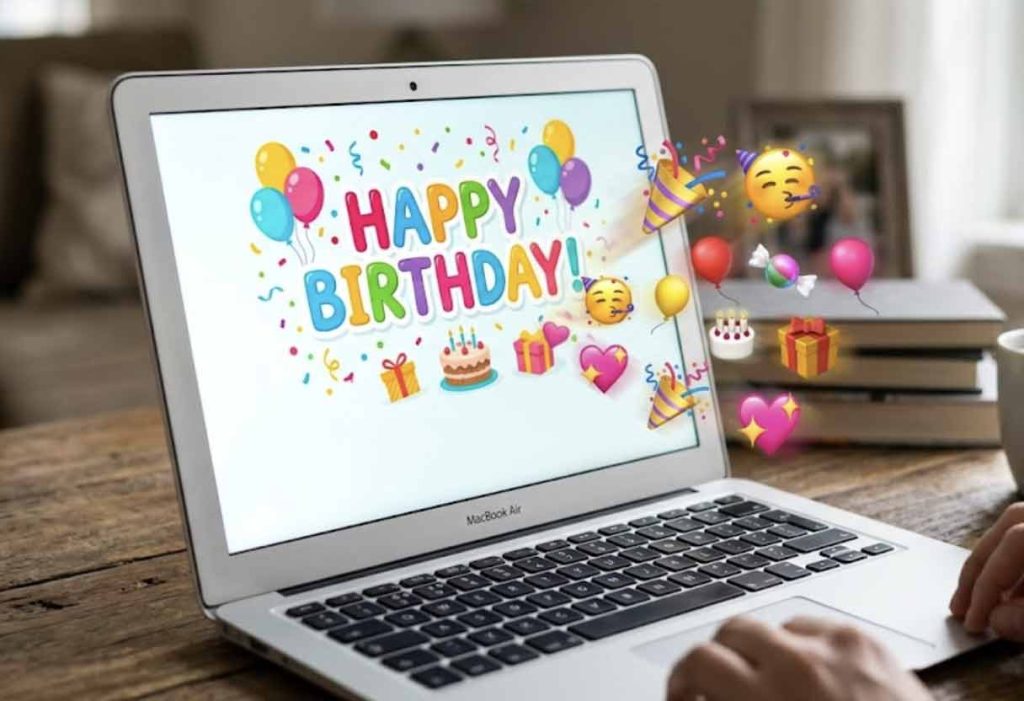
E-cards beautifully bridge the gap between digital convenience and creative design. They are effortless to send and can still carry a highly thoughtful sentiment when you take the time to customize the message.
Why E-Cards Are Appealing
Modern e-cards can feature beautiful animations, embedded music, personal photos, and custom typography. They arrive instantly, eliminate the need for postage, and are incredibly practical for international recipients.
When E-Cards Work Best
E-cards are ideal for:
- Last-minute yet visually striking birthday wishes
- Friends and relatives living overseas
- Tech-savvy individuals who appreciate clever digital design
- Group-signed virtual cards from a remote team
When E-Cards Can Feel Less Personal
Standard, template-heavy designs can sometimes feel generic if they lack meaningful customization. A basic, automated message without personal details can make the gesture feel transactional.
Handwritten Birthday Cards
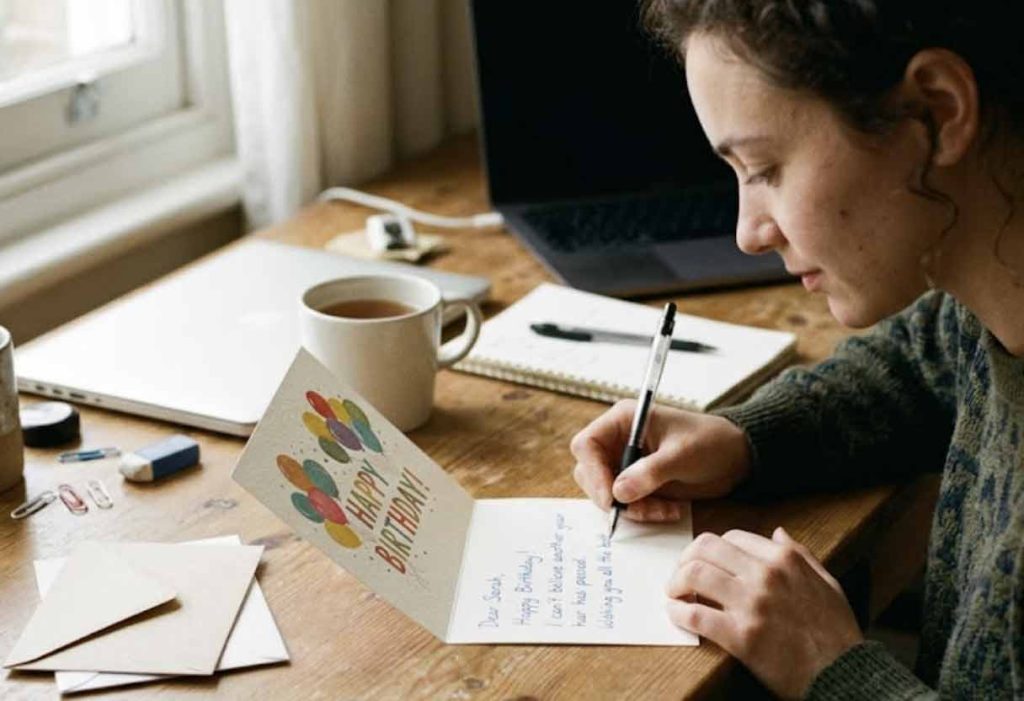
Handwritten cards frequently stand out as the gold standard of personal greetings because they demand tangible time, effort, and intentionality. The uniqueness of your actual handwriting adds an organic, emotional touch that digital text simply cannot replicate.
Why Handwritten Cards Often Feel Most Personal
They require deliberate planning—from selecting the physical card to sitting down and composing a message by hand. Furthermore, physical cards can be displayed on a mantelpiece, tucked away in a keepsake box, and reread years down the line.
When Handwritten Cards Work Best
They are ideal for:
- Romantic partners, parents, children, and lifelong friends
- Milestone birthdays (such as 30th, 50th, or 80th celebrations)
- Deeply emotional or significant relationships
- Individuals who genuinely value traditional, tactile gestures
Possible Limitations
Handwritten cards require planning. Potential postal delays can make them less practical for overseas recipients or last-minute birthday wishes.
Printed Birthday Cards
Printed cards offer a highly polished, professional aesthetic and allow you to incorporate custom photos, names, or graphic layouts. However, they can sometimes lack warmth if they aren’t accompanied by a handwritten signature or note.
How Printed Cards Differ from Handwritten Cards
Printed cards are professionally manufactured and visually seamless, often relying on digital templates. Conversely, completely handwritten cards feel noticeably warmer and more intimate because the entire physical execution comes directly from you.
When Printed Cards Work Best
They are useful for:
- Personalized, high-quality photo collages or family cards
- Corporate, business, or workplace birthday greetings
- Mass-printed holiday or birthday cards sent to a large circle
- Recipients who appreciate clean, modern, and stylized designs
How to Make a Printed Card Feel More Personal
Always sign it with a handwritten sign-off, slip a personal photograph inside, or write a quick sentence referencing a shared memory or an inside joke.
Social Media Birthday Posts
Social media posts turn a birthday into a public celebration, making it easy to rally a community around the person celebrating. They work best when the recipient thrives on social connection and enjoys public recognition.
Benefits of Public Birthday Wishes
A public timeline post highlights the individual, allows you to showcase favorite photos, and invites mutual friends or family members to join in on the celebration.
When Social Posts Work Best
They are suitable for:
- Casual friends, acquaintances, and professional peers
- People who love public appreciation and digital engagement
- Photo-based birthday tributes and throwback galleries
- Shared memories and collective group celebrations
Why Social Posts May Feel Less Personal
Public posts can occasionally feel performative or passive, often requiring minimal effort. Because they lack privacy, they should generally complement—rather than replace—a direct, private message for anyone close to you.
Digital vs. Handwritten Birthday Cards: Direct Comparison
While both formats can deliver a profoundly personal impact, they offer distinctly different operational and emotional strengths.
| Factor | Digital Birthday Cards | Handwritten Birthday Cards |
| Speed and convenience | Fast, seamless, and near-instant to send | Requires dedicated time, materials, and planning |
| Time and effort | Typically requires less physical effort | Demonstrates a higher tier of effort and deliberate care |
| Personalization | Easily integrates photos, videos, and interactive elements | Feels deeply personal through handwriting and tailored wording |
| Emotional impact | Exceptionally strong when the written text is meaningful | Often carries an inherent warmth and nostalgic value |
| Privacy | Simple to keep completely private or share publicly | Inherently private, tactile, and direct |
| Cost | Frequently free or highly budget-friendly | Involves the cost of the card, materials, and postage |
| Long-distance access | Flawless for reaching loved ones globally in seconds | Subject to shipping costs and potential delivery delays |
| Keepsake value | Can be archived digitally, though easily buried over time | High physical keepsake value; easy to display and store |
Which Format Feels Most Personal?
Handwritten cards naturally tend to feel the most personal because they serve as a physical testament to your time, effort, and focus. They create a tangible keepsake that the recipient can physically touch, display, and hold onto for a lifetime.
However, a well-crafted digital message can rival that emotional impact when it includes deeply intentional details, vivid shared memories, or a sincere, expressive voice note. Ultimately, the recipient’s communication preferences matter far more than tradition.
A beautifully penned handwritten card might feel like clutter to someone who values a strictly minimalist, digital lifestyle. Conversely, a generic, one-word digital text can make even the closest relationship feel distant.
When Each Birthday Greeting Format Works Best
Every delivery format naturally aligns with a specific relationship dynamic, situation, or timeframe:
- Text: Best for quick, casual, and real-time birthday wishes.
- WhatsApp: Ideal for expressive voice notes, candid photos, video clips, and long-distance chats.
- Email: Best for articulate, longer-form, or professional birthday messages.
- E-card: A fantastic option for creative, scheduled, or stylish last-minute greetings.
- Handwritten card: The premium choice for milestone birthdays and deeply meaningful relationships.
- Printed card: Perfectly suited for polished physical greetings featuring custom photography.
- Social media post: Excellent for public celebrations, casual circles, and shared memory tributes.
Combining Digital and Physical Birthday Wishes
Layering both digital and physical formats can elevate a birthday greeting, ensuring it is both perfectly timed and deeply thoughtful:
- Mail a handwritten card early, then follow up with a celebratory text on their actual birthday.
- Pair a beautifully printed photo card with an engaging, personal phone call.
- Share a festive throwback photo on social media, but back it up with a private, heartfelt message.
- Send a warm WhatsApp note for an immediate morning celebration while their physical card is still moving through the mail.
Frequently Asked Questions
Generally, yes. Handwritten cards require physical materials, deliberate time, and personal penmanship, which naturally imbues them with a tangible sense of effort and meaning.
Absolutely. A digital message becomes deeply personal when you swap out generic phrasing for sincere wording, specific shared memories, meaningful photos, or a warm voice recording.
WhatsApp messages, interactive e-cards, and emails are excellent for bridge-building across time zones because they arrive instantly. For a physical touch, you can always mail a traditional card a couple of weeks in advance.
A quick social media post is typically sufficient for an acquaintance, former classmate, or coworker. For close friends, partners, and family members, it is best to accompany a public post with a private message, a phone call, or a card.
Move past the standard formula: address them by a preferred name or nickname, recall a specific memory you share, include a favorite inside joke, and state clearly what their presence brings to your life.

I’m Halima! I’m a content writer specializing in birthday articles and celebration guides. From heartfelt wishes to creative party ideas, I craft engaging content that helps people celebrate their special days in unforgettable ways.