
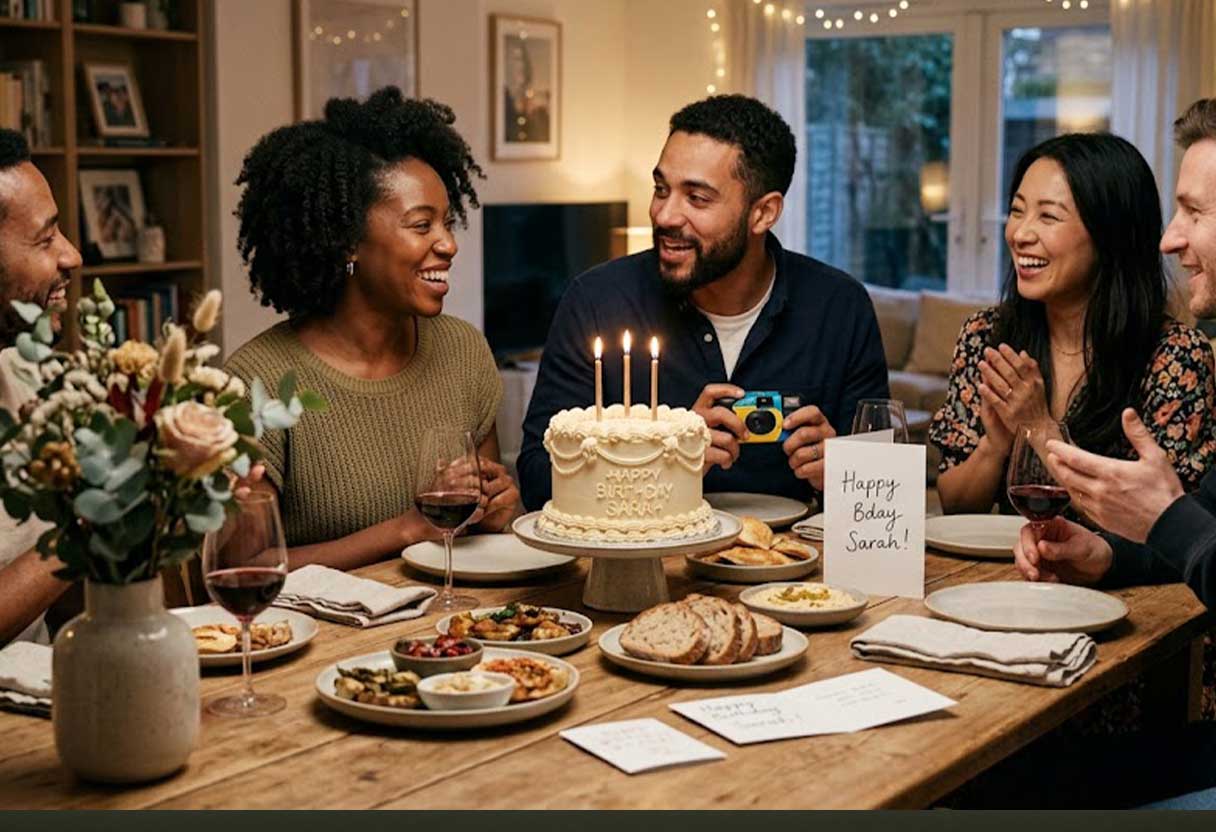
The most interesting birthday trends for 2027 may not begin with birthdays.
They are already taking shape in the way people socialize, spend money, use social media, decorate their homes, follow trends, and express their identities. Current research points toward comfort, personalization, nostalgia, authentic experiences, and more deliberate spending.
That does not mean every birthday will suddenly become small, cozy, or minimalist. These are predictions based on signals visible in 2025 and 2026, not rules for how everyone will celebrate.
What they suggest is something broader: birthdays are becoming less about following a standard party formula and more about creating a day that genuinely fits the person celebrating it.
1. Smaller Cakes Will Become the New Birthday Centerpiece
Mini cakes are no longer limited to a few highly styled bakery feeds.
Tastewise’s 2026 birthday cake analysis identifies mini formats, personalized designs, global flavors, and hybrid desserts among the year’s defining cake trends. It also connects smaller formats with greater flexibility, customization, and less waste. The wider rise of bento cakes shows how easily a small, highly visual cake can travel through social media.
Their birthday appeal is easy to understand. A four-inch cake works naturally for a dinner with a few friends, a couple celebrating together, or someone who wants a cake without days of leftovers.
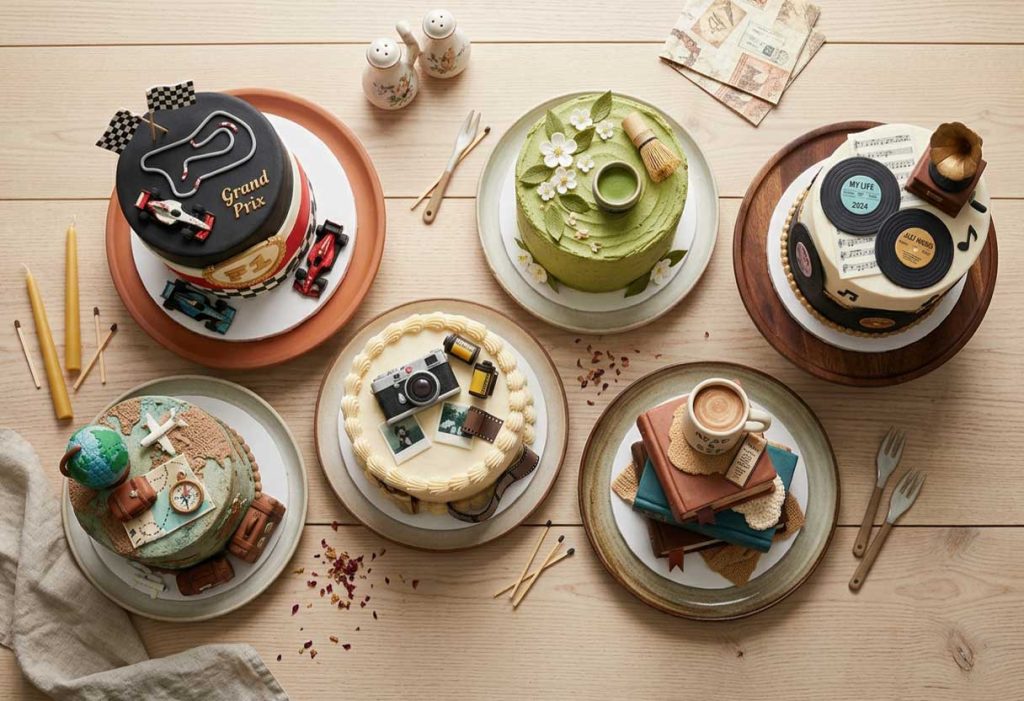
The smaller surface also encourages personality. Bakers can add an inside joke, a short message, someone’s favorite character, vintage piping, or intentionally imperfect decoration. That makes the cake feel less like party catering and more like a personal gift.
By 2027, we may see more small statement cakes, heart cakes, individual cakes, and mini desserts built around the birthday person’s tastes. Large cakes will still have their place, especially for bigger gatherings. But size may stop being the thing that makes a birthday cake feel special. Personalization will.
2. Birthday Themes Will Get Hyper-Personal and More Niche
People are not necessarily abandoning trends. They are becoming more selective about which ones they adopt.
Pinterest’s 2026 research found that 42% of global respondents only participate in trends that suit them. Its broader message for the year is “curating, not copying”: people want trends to reflect their identity rather than replace it.
Eventbrite is seeing a similar shift in live events. Its 2026 Social Study found that 69% of respondents wanted more events combining different interests or cultural worlds. Coffee-and-running events, anime raves, and craft-based social gatherings were among the combinations showing growth.
Birthdays are a natural place for that specificity to appear. Instead of a general “music birthday,” someone might build a night around one artist, album, or concert era. A child who loves dinosaurs and outer space can have both. A Formula 1 fan who also loves matcha and retro photography does not have to choose one theme. The 2027 birthday theme may become less recognizable to strangers but far more meaningful to the guest of honor.
3. Nostalgia Will Keep Driving Birthday Aesthetics
Nostalgia is already a major cultural force beyond party planning.
Pinterest says people are turning to familiar media, food, and childhood references for emotional comfort. Fifty-two percent of respondents in its 2026 research said they were rewatching classic television or films. Hootsuite also identifies “nostalgic remix” culture as a major 2026 social-media trend.
That helps explain why retro birthday aesthetics can feel relevant rather than simply recycled.
A nostalgic birthday does not need to mean throwing a generic ’90s party. It could recreate someone’s childhood sleepover, use the snacks they loved after school, play music from their teenage years, copy an old family birthday cake, or bring back a game everyone once played together.
Vintage-style cakes fit the mood too. Tastewise reports sustained interest in retro cake designs featuring piped borders, pastel colors, and nostalgic decoration. The strongest version of this trend will be personal nostalgia, not costume nostalgia. A reference that makes ten guests say, “I remember that,” can carry more emotional weight than a perfectly coordinated decade-themed party.
4. Cozy, At-Home Celebrations Will Become More Desirable
“Cozy” is becoming more than an interior-design word. Pinterest found that 55% of global respondents prioritized comfort as something they needed in daily life. Hootsuite’s 2026 trends similarly connect cozy aesthetics and slow living with a response to overstimulation.
At-home entertaining is also gaining momentum. The 2026 International Housewares Association survey found that 57% of respondents had hosted a casual gathering during the previous year, compared with 47% in the 2025 survey. Occasion-based hosting increased from 49% to 58%. Birthdays were the most commonly cited casual event-based occasion, at 72%.
That makes home birthdays especially worth watching.
A cozy birthday could mean dinner around one table, movies and takeout, a backyard meal, a listening party, homemade cocktails, or cake in the living room with the people you actually want there. This does not mean people will stop decorating. The same IHA research found that themes and atmosphere still matter to hosts. The difference is that comfort may increasingly come before spectacle.
5. Smaller Guest Lists Will Make Birthdays More Intentional
This is one of the predictions where the evidence needs to be handled carefully.
There is not yet strong research proving that birthday guest lists themselves are universally shrinking. What we can see is a broader appetite for lower-pressure ways of spending time together.
Eventbrite calls one of its major 2026 trends “soft socializing.” Its study found that 58% of respondents considered socializing somewhat important but preferred it not to be the main focus. Another 45% wanted control over when and how they interacted.
That mindset could favor smaller or more deliberately designed birthday gatherings.
Instead of inviting every possible acquaintance, someone might choose dinner with six close friends, a family brunch, a weekend with two other couples, or separate celebrations with different friendship groups.
A small guest list can also make personalization easier. You can choose food everyone actually likes, plan an activity around shared interests, or spend meaningful time with each guest. So the prediction is not simply that parties get smaller. It is that guest count may become less important than guest chemistry.
6. “Real Over Perfect” Birthday Content Will Reshape Social Media
Social media’s polished era is facing growing competition from content that feels noticeably human.
Hootsuite’s 2026 research says brands are intentionally moving away from overly polished social content, with imperfections and natural pacing increasingly used as signals of authenticity. As AI-generated content becomes more common, visible human touches can also become more valuable.
Eventbrite describes a related shift offline as the “Reset to Real” era: people are looking for experiences that feel human, participatory, spontaneous, and difficult to reproduce exactly.
Birthday content is well suited to that change. The photo dump may matter more than the single perfect portrait. Blurry dancing, half-eaten cake, screenshots from the group chat, disposable-camera shots, friends laughing mid-bite, and decorations that did not quite survive the evening can communicate what the celebration actually felt like. Beautiful birthday photography will not disappear. Neither will carefully planned parties.
But by 2027, perfection may no longer be required for a birthday to look worth sharing. Sometimes the imperfect picture is the one people save.
7. Experiences Will Matter More Than Elaborate Party Decor
Experience spending remains one of the clearest broader trends supporting these birthday predictions.
Mastercard’s 2026 Experience Economy Report found that 65% of UK consumers were prioritizing in-person experiences to balance time spent online. Even amid financial pressure, 88% said they were willing to cut spending on “things” if it allowed them to take part in more experiences.
Eventbrite’s 2026 study also found strong interest in experiences that feel unusual, spontaneous, participatory, and socially meaningful.
For birthdays, that could move more of the planning budget from “What should the room look like?” toward “What are we going to do together?”
That might mean pottery, karaoke, a concert, a cabin trip, cooking classes, hiking, a food crawl, amusement parks, escape rooms, sports, or a private screening. Decor still has value when it adds atmosphere. But it does not have to carry the entire celebration.
A birthday where everyone attempted to make pasta together may produce stronger memories than one where guests spent the evening admiring a perfectly designed backdrop. In 2027, the activity itself may increasingly become the theme.
8. Personalized Birthday Rituals Will Replace One-Size-Fits-All Traditions
Candles, cake, presents, and “Happy Birthday” are not about to disappear. The more interesting possibility is that people will add their own traditions around them. Pinterest’s 2026 research connects the search for emotional comfort with familiar rituals while also showing that consumers increasingly want to adapt trends to their individual identity.
Applied to birthdays, that creates room for highly personal traditions.
Someone might eat breakfast at the same café every year. A family could remake one childhood cake. Friends might record the same short birthday interview each year. Someone else could write a letter to their future self, take an annual solo walk, visit a favorite bookstore, or recreate the same photograph every birthday. These rituals do not need to be expensive or social-media friendly. Their value comes from repetition.
That makes this an emerging prediction rather than an established birthday trend. The evidence shows people valuing comfort, identity, and personally meaningful routines. Birthdays provide a natural annual moment for those behaviors to become traditions. The future may not replace old rituals so much as add new ones beside them.
9. Birthday Spending Will Shift From “More” to “More Meaningful”
Consumers are thinking harder about value, including those who can afford to spend more.
Deloitte’s 2026 Consumer Products Outlook found that 47% of consumers globally, including 35% of high-income households, qualified as “value seekers.” Importantly, Deloitte also found that these consumers were still willing to spend when something genuinely felt worth the price.
Someone may skip dozens of disposable decorations but spend more on dinner. Friends might pool their money for one gift the recipient genuinely wants. A parent could choose a smaller custom cake while paying for an activity the child has been talking about for months.
Mastercard’s 2026 experience research supports the same broader idea: becoming more selective about spending does not necessarily mean spending less on what feels meaningful.
So a more intentional birthday should not automatically be confused with a cheaper birthday.
People may simply concentrate their budget. The question shifts from “How much can we add?” to “Which parts of this celebration are actually worth paying for?” That may become one of the most practical birthday trends of 2027.
10. Birthdays Will Become More About Personal Identity Than Age
Milestone ages are not going anywhere. Turning 18, 21, 30, 40, or 50 will continue to carry cultural meaning. But age may become less useful as the main creative idea behind a celebration.
Pinterest’s 2026 research emphasizes personal identity and adapting trends rather than copying them. Eventbrite likewise found growing demand for highly specific gatherings that combine several interests and communities at once. That creates a different kind of birthday.
A 40th might revolve around someone’s new obsession with running. A 27th could celebrate a favorite fandom. A 60th might recreate the record collection, food, and friendships that shaped someone’s youth.
Even birthday wishes can reflect this shift.
“Happy 40th” tells someone what age they reached.
“I love the person you’ve become this year” recognizes what actually happened during it.
Age will still give us the number on the cake. But personality, interests, relationships, memories, and accomplishments may increasingly determine what the birthday looks and feels like. The celebration becomes less about entering an age category and more about recognizing an individual life.

I’m Halima! I’m a content writer specializing in birthday articles and celebration guides. From heartfelt wishes to creative party ideas, I craft engaging content that helps people celebrate their special days in unforgettable ways.


